



ATP-binding cassette (ABC) transporters
ATP-binding cassette transporters
ATP-binding cassette (ABC) transporters are a large group of membrane proteins, comprising 49
transporters that are further subdivided into seven
subfamilies, ABC A to G, based on sequence
similarities, that have two nucleotide-binding domains (NBDs) and two transmembrane binding domains (TMDs). ATP-binding cassette (ABC) transporters couple transport of a substrate against a chemical gradient and energized directly by the hydrolysis of ATP. ATP-binding cassette transporters transport a wide variety of substrates, including inorganic and organic small molecules like metal ions, sugars, amino acids, nucleotides, and vitamins, as well as larger organic compounds such as peptides, proteins, oligonucleotides, cellular metabolites, and drugs. ATP-binding cassette (ABC) transporters are involved in many important physiological processes like nutrient uptake, cellular detoxification, lipid homeostasis, signal transduction, viral defense, and antigen presentation. ATP-binding cassette (ABC) transporters play an important role in a number of diseases, including Stargardt disease, Alzheimer's disease, immune deficiency, and cystic fibrosis[1][2].
References:
- [1]. Locher KP. Review. Structure and mechanism of ATP-binding cassette transporters. Philos Trans R Soc Lond B Biol Sci. 2009 Jan 27;364(1514):239-45. [Content Brief]
- [2]. Sodani K, et al. Multidrug resistance associated proteins in multidrug resistance. Chin J Cancer. 2012 Feb;31(2):58-72. [Content Brief]
All Product Categories
-
ATP-binding cassette (ABC) transporters Inhibitors
(5)
View all products
-
ATP-binding cassette (ABC) transporters Activators
(10)
View all products
-
ATP-binding cassette (ABC) transporters Modulators
(3)
View all products
-
ATP-binding cassette (ABC) transporters Inducers
(3)
View all products
-
ATP-binding cassette (ABC) transporters Substrates
(2)
View all products
-
ATP-binding cassette (ABC) transporters Related Products (27)
Related Products (27)

- 1
- 2
-
22(R)-Hydroxycholesterol
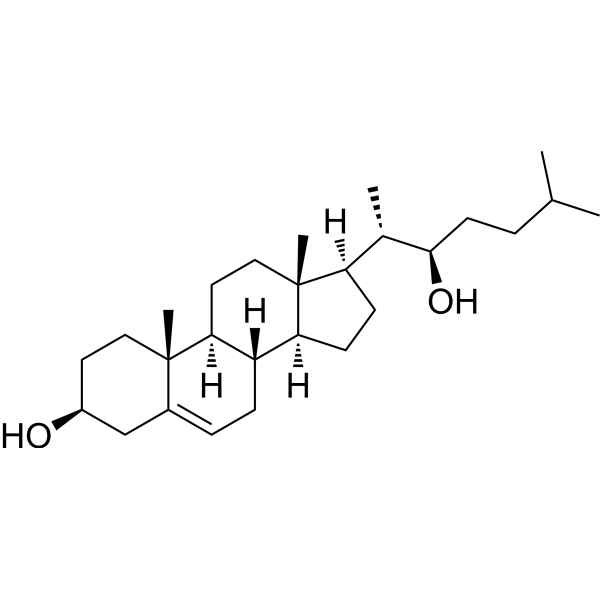 0 ImagesSynonyms: Narthesterol22 (R)-Hydroxycholesterol (Narthesterol) is a natural oxysterol, acting as a LXRα agonist that inhibits cancer cell proliferation. 22 (R)-Hydroxycholesterol activates LXRα-mediated upregulation of downstream ABCA1 expression, enhances apolipoprotein-dependent cholesterol efflux, reduces intracellular cholesterol content, and decreases the production of β-amyloid peptide. 22 (R)-Hydroxycholesterol induces the differentiation of human mesenchymal stem cells into functional dopaminergic neurons. 22 (R)-Hydroxycholesterol is applicable to research related to cancer, Alzheimer's disease, and Parkinson's disease.
-
Estradiol 3-glucuronide
 0 ImagesCat. No.: HY-W585842CAS No.: 15270-30-1Estradiol 3-glucuronide is an estrogen metabolite, which is a glucuronide conjugate formed from Estradiol (HY-B0141) via catalysis by uridine diphosphate glucuronosyltransferases in tissues such as the liver. Estradiol 3-glucuronide is a potent substrate of Mrp2, with an S50 value of 55.7 μM. Estradiol 3-glucuronide achieves hepatobiliary transport in hepatocytes through basolateral uptake via OATP1B1, OATP1B3 and OATP2B1, as well as apical efflux via MRP2 and BCRP.
-
Prostaglandin A1
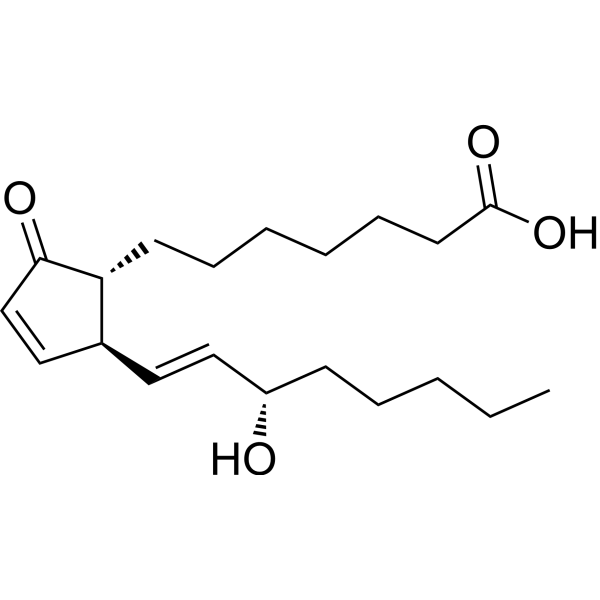 0 ImagesProstaglandin A1 is a dehydrated derivative of Prostaglandin E1. Prostaglandin A1 exhibits antiviral, anti-inflammatory, antitumor, neuroprotective, and antihypertensive activities. Prostaglandin A1 covalently binds to cysteine residues of target proteins through Michael addition, or activates pathways such as PPARγ and HSPs via transcriptional regulation. Prostaglandin A1 is used in research on Mayaro virus infection, stroke, Alzheimer's disease, neuroblastoma, melanoma, and severe gestational hypertension.
-
10-Hydroxyhexadecanoic acid
 0 Images10-Hydroxyhexadecanoic acid is a hydroxy fatty acid found in Camembert cheese. 10-Hydroxyhexadecanoic acid can promote cholesterol efflux from ABCA1 and ABCG1, preventing the accumulation of excess cholesterol in cells. 10-Hydroxyhexadecanoic acid can be used in anti-atherosclerosis research.
-
ApoA-I mimetic peptide 5A
 0 ImagesCat. No.: HY-P10551ApoA-I mimetic peptide 5A is an ApoA-I mimetic peptide and ABCA1 activator. ApoA-I mimetic peptide 5A enhances CD36 expression through the JAK2/STAT3 signaling pathway. ApoA-I mimetic peptide 5A promotes cholesterol efflux, remyelination, and myelin debris clearance/degradation. ApoA-I mimetic peptide 5A can be used in research on inflammatory bowel disease, demyelinating diseases, and atherosclerosis.
-
ABC transporter
modulator-2
 0 ImagesCat. No.: HY-183033CAS No.: 3093663-15-8ABC transporter modulator-2 (Compound I-200) is a ABC transporter expression modulator. ABC transporter modulator-2 upregulates the expression of wild-type ABCC6 with an EC50 of <1 μM. ABC transporter modulator-2 upregulates the expression of wild-type ABCB4 with an EC50 of <1 μM. ABC transporter modulator-2 upregulates the expression of wild-type ABCD2 with an EC50 of <1 μM. ABC transporter modulator-2 upregulates the expression of the ABCA4P1380L mutant with an EC50 of <1 μM. ABC transporter modulator-2 can be used in the research of diseases associated with ABC transporter dysfunction.
-
Isoxazole
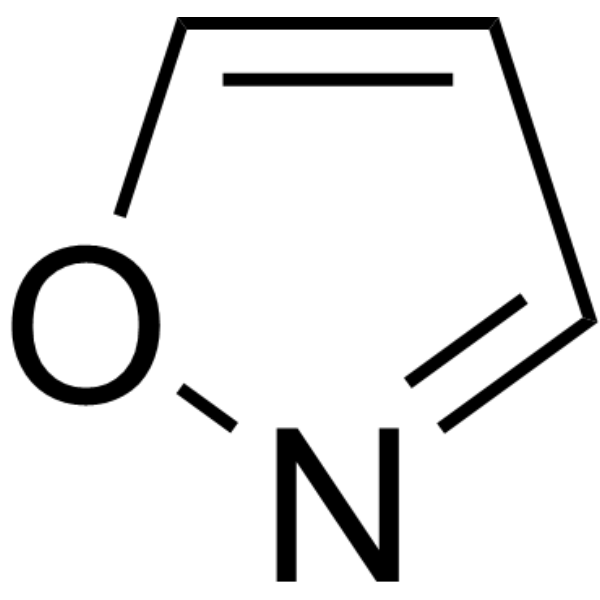 0 ImagesIsoxazole is a member of the five-membered heterocycle drug scaffold. Isoxazole has been used as a BET bromodomain inhibitor and can improve β-cell function in a diabetic mouse model. Isoxazole and its derivatives exhibit broad biological activities (such as antimicrobial, antibacterial, antifungal, antiviral, anticancer, anti-inflammatory, immunomodulatory, analgesic, anti-tuberculosis, and anti-diabetic effects). For example, the bicyclic Isoxazole can act as an HSP90 inhibitor, and the tricyclic Isoxazole is promising as a selective multidrug resistance protein (MRP1) inhibitor.
-
ABC transporter
modulator-1
 0 ImagesCat. No.: HY-183032CAS No.: 3093661-22-1ABC transporter modulator-1 (Compound I-5) is an ABC transporter expression enhancer. ABCC6 modulator-1 upregulates the expression of wild-type ABCC6, wild-type ABCB4, and ABCA4P1380L mutant, with an EC50 of <1 μM for all.
-
ABC transporter
modulator-3
 0 ImagesCat. No.: HY-183034CAS No.: 3093661-88-9ABCC6 modulator-3 (Compound I-71) is a ABCC6 activator with an EC50 < 1 μM. ABCC6 modulator-3 upregulates the expression of wild-type ABCC6. ABCC6 modulator-3 is used in research on diseases associated with ABC transporter dysfunction.

-
Cholest-5-ene-3ß,22(S)-diol
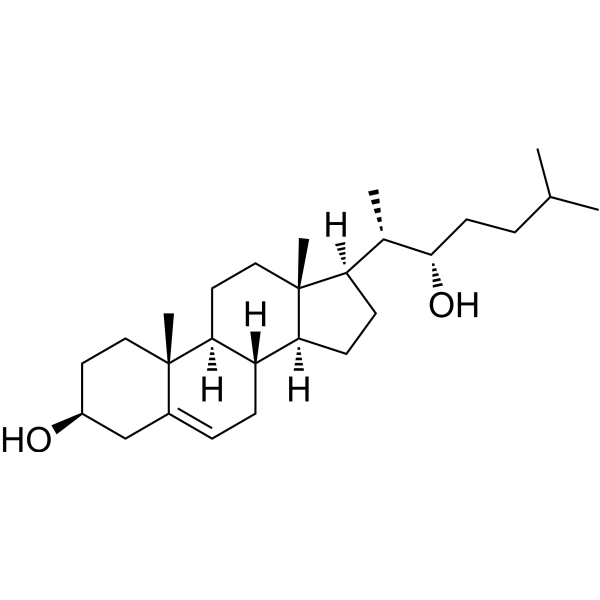 0 ImagesSynonyms: (22S)-HydroxycholesterolCholest-5-ene-3ß,22(S)-diol ((22S)-Hydroxycholesterol) is an orally active oxysterol with no significant cytotoxic, oxidative, or inflammatory effects on human prokaryotic leukemia cells. Cholest-5-ene-3ß,22(S)-diol inhibits weight gain and increased serum triacylglycerol (TAG) levels in rat models.
-
Estradiol 3-glucuronide sodium
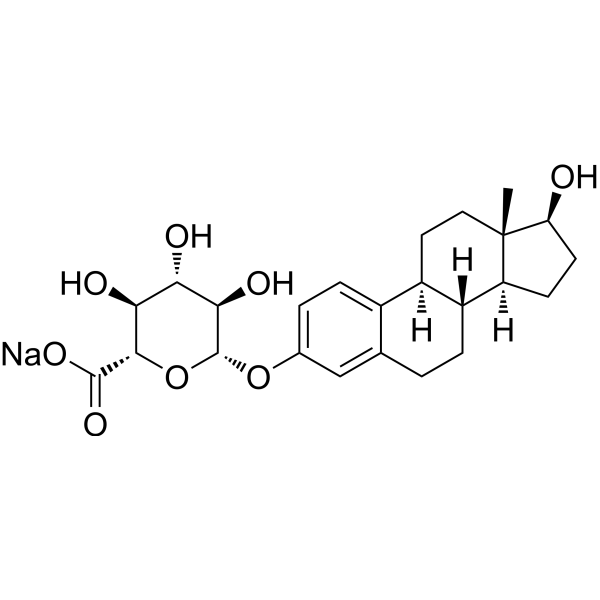 0 ImagesEstradiol 3-glucuronide sodium is an estrogen metabolite, which is a glucuronide conjugate formed by the catalysis of uridine diphosphate glucuronosyltransferase in tissues such as the liver from Estradiol (HY-B0141). Estradiol 3-glucuronide sodium is a potent substrate of Mrp2, with an S50 of 55.7 μM. Estradiol 3-glucuronide sodium achieves hepatobiliary transport in hepatocytes through basolateral uptake via OATP1B1, OATP1B3 and OATP2B1, as well as apical efflux via MRP2 and BCRP.
-
Nitroxynil
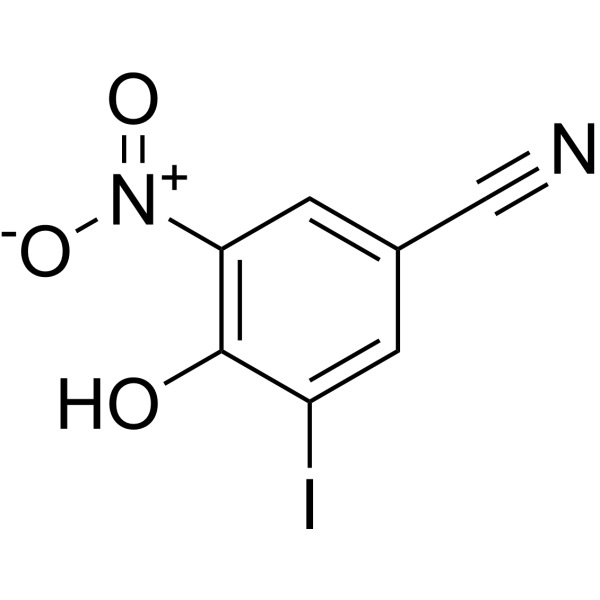 0 ImagesNitroxynil is a broad-spectrum veterinary anthelmintic and a substrate of ABCG2. Nitroxynil inhibits ATP production by uncoupling the oxidative phosphorylation process of mitochondria, thereby disrupting the parasite body covering, impairing its motility, and ultimately inducing parasite death. Nitroxynil induces chromosomal aberrations, sister chromatid exchanges and abnormal sperm morphology, and interferes with spermatogenesis. Nitroxynil is widely applicable to studies on fascioliasis, myiasis, Haemonchus spp. infections, and Oestrus ovis infections.
-
NO-Pravastatin
 0 ImagesCat. No.: HY-184354CAS No.: 733034-46-3NO-Pravastatin is a derivative of Pravastatin (HY-B0165) covalently linked with an NO donor moiety, endowing it with dual functions of HMG-CoA reductase (HMGCR) inhibition and exogenous nitric oxide (NO) release. NO-Pravastatin activates PPARα/γ and ABCA1, and inhibits LPS (HY-D1056)-induced TNFα production. NO-Pravastatin can be used in research related to gallstones and cardiovascular diseases.
-
PPAR agonist 8
 0 ImagesCat. No.: HY-184312CAS No.: 1031072-40-8PPAR agonist 8 is an orally active pan-PPAR agonist, with KD values of 0.576 μM, 2.06 μM and 1.45 μM for PPARα, PPARγ and PPARδ, respectively. PPAR agonist 8 upregulates the expression of ATP-binding cassette transporter A1 (ABCA1) and promotes cholesterol efflux. PPAR agonist 8 reduces plasma cholesterol levels, decreases cholesterol accumulation in the liver and cholesterol deposition in pancreatic islets, regulates glucose and lipid metabolism, and causes no side effects of weight gain and obesity. PPAR agonist 8 can be used in the research of type 2 diabetes, hepatic steatosis and pancreatic islet dysfunction.
-
Antimalarial agent 66
 0 ImagesCat. No.: HY-187925CAS No.: 2724247-62-3Antimalarial agent 66 is an orally effective Na+ATPase (PfATP-4) inhibitor and antimalarial agent with an EC50 of 19 nM against the P. falciparum 3D7 strain. Antimalarial agent 66 kills malaria parasites by inhibiting PfATP-4, leading to elevated intracellular sodium ion concentration. Antimalarial agent 66 can be used for malaria research.
-
Isoxazole (Standard)
 0 ImagesCat. No.: HY-W010649RCAS No.: 288-14-2Isoxazole (Standard) is the analytical standard of Isoxazole (HY-W010649). This product is intended for research and analytical applications. Isoxazole is a member of the five-membered heterocycle drug scaffold. Isoxazole has been used as a BET bromodomain inhibitor and can improve β-cell function in a diabetic mouse model. Isoxazole and its derivatives exhibit broad biological activities (such as antimicrobial, antibacterial, antifungal, antiviral, anticancer, anti-inflammatory, immunomodulatory, analgesic, anti-tuberculosis, and anti-diabetic effects). For example, the bicyclic Isoxazole can act as an HSP90 inhibitor, and the tricyclic Isoxazole is promising as a selective multidrug resistance protein (MRP1) inhibitor?.
-
Anti-ABCB5 Antibody
 0 ImagesCat. No.: HY-P990325Anti-ABCB5 Antibody is a CHO-expressed human antibody that targets ABCB5. The Anti-ABCB5 Antibody has a huIgG2 heavy chain and a huκ light chain, with a predicted molecular weight (MW) of 145 kDa. The isotype control for the Anti-ABCB5 Antibody can refer to Human IgG1 kappa, Isotype Control (HY-P99001).
-
CaMdr1p-IN-1
 0 ImagesCat. No.: HY-120432CAS No.: 1257542-38-3CaMdr1p-IN-1 (Compound A) is an inhibitor for the major facilitator superfamily transporter CaMdr1p. CaMdr1p-IN-1 exhibits chemosensitizing efficacy. CaMdr1p-IN-1 synergizes with Fluconazole (HY-B0101), that inhibits CaMdr1p overexpressing Candida albicans with MIC of 10 μM.
-
ABC transporter
modulator-4
 0 ImagesCat. No.: HY-183035CAS No.: 3089179-10-9ABC transporter modulator-4 (I-677-Isomer 1 (S configuration)) is a ABC transporter expression modulator. ABC transporter modulator-4 is used in studies of ABC transporter dysfunction.
- 1
- 2



